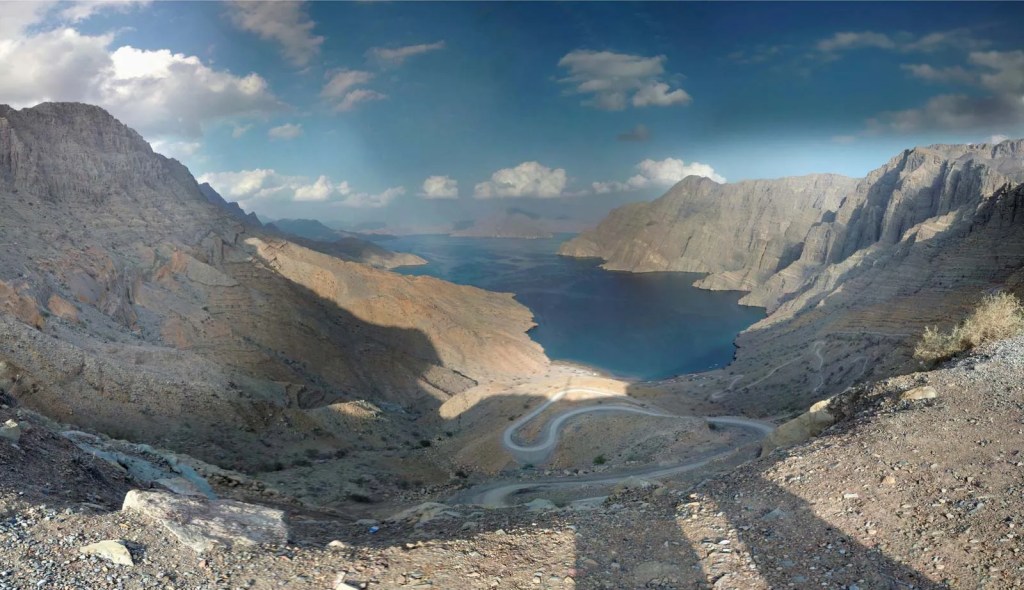
About 20% of the world’s oil passes through a narrow waterway between Iran and Oman: the Strait of Hormuz. The current tension between the United States and Iran represents one of the clearest pathways to a stagflationary shock in the global economy.
If the Strait of Hormuz is disrupted, global oil supply tightens almost immediately, leading to higher oil prices, increased transportation costs, and rising input costs across industries. Energy is a foundational input across nearly every sector of the economy, meaning higher energy prices do not occur in isolation. The effects spread through supply chains, pricing, and ultimately consumer costs.
This is where stagflation risk begins to emerge. Stagflation is particularly damaging because it combines two forces that typically do not occur together: rising prices and slowing economic growth. Oil shocks can trigger both simultaneously. Higher energy costs reduce consumer purchasing power and compress business margins, while also pushing inflation higher through increased production and transportation costs.
This creates a difficult policy environment for central banks. Inflationary pressure limits their ability to cut rates, while maintaining tighter monetary conditions risks further slowing economic activity. That tension sits at the core of stagflation risk.
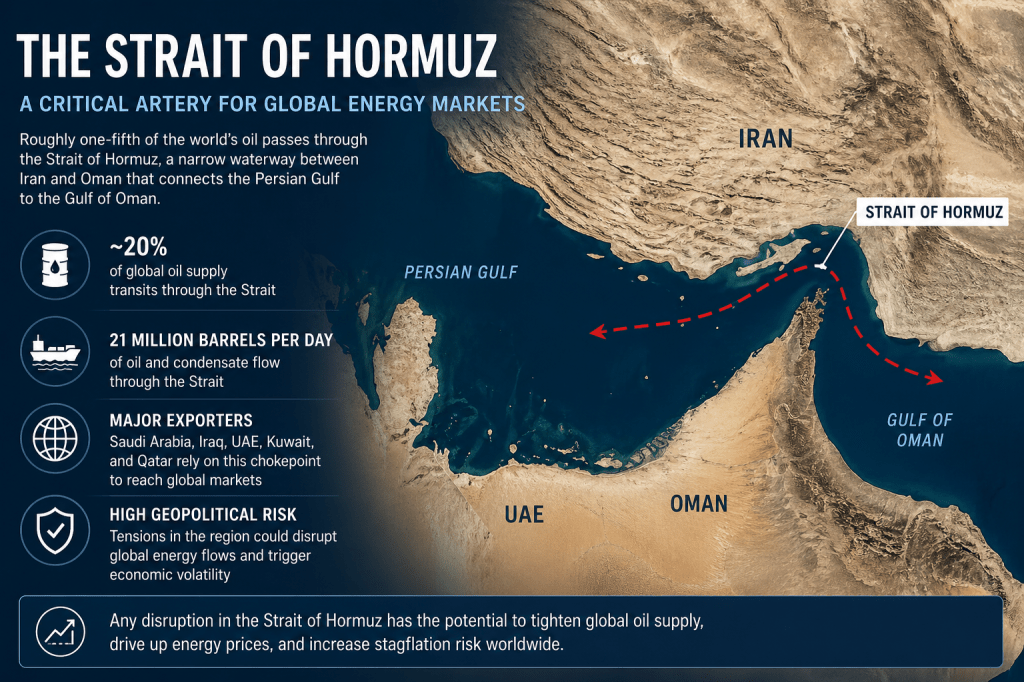
The first-order effect of a disruption is straightforward: higher oil prices. Analysis of second-order effects can reveal opportunities for short-term active investment strategies:
- Governments may respond with subsidies or by drawing on strategic reserves.
- Central banks may delay or adjust anticipated rate cuts due to renewed inflation pressure.
- Consumers may reduce spending as costs rise, while businesses may delay investment decisions amid growing uncertainty.
Over time, these responses compound and reinforce the slowdown. If this risk is becoming more material, the signal will likely emerge across several indicators simultaneously:
- Oil prices, particularly Brent and WTI, would reflect tightening supply conditions.
- Shipping and insurance costs in the region would capture rising operational stress.
- Central bank communication would reveal how policymakers are weighing inflation risks against weakening growth.
- Consumer sentiment may also begin to deteriorate as higher costs filter through the broader economy.
The Strait of Hormuz represents a structural vulnerability within the global economic system. In the current environment, it remains one of the most direct channels through which a geopolitical conflict could translate into a broader stagflationary shock. For that reason, both sides of the conflict likely have strong incentives to keep the trading channel operational, even as tensions escalate.
 Real Socioeconomics